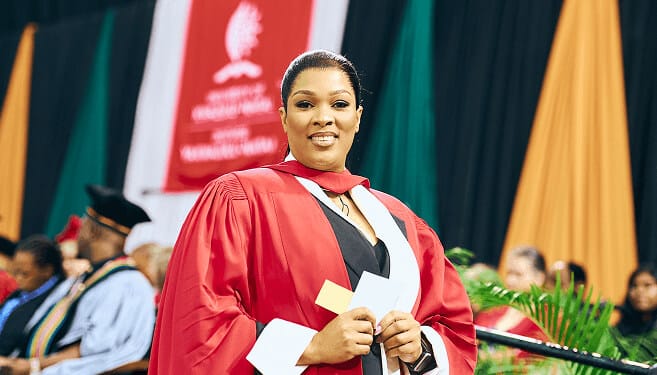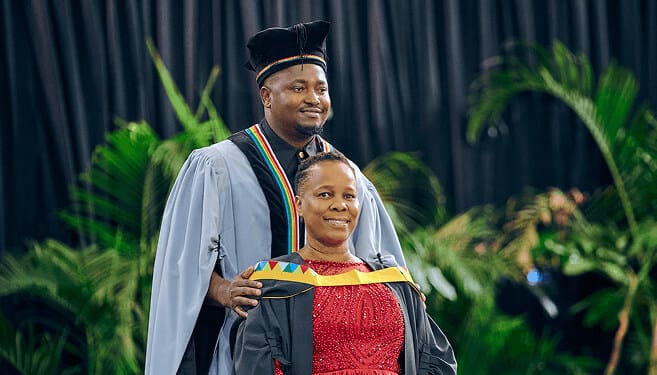
PhD in Leadership Studies graduate, Dr Noluthando Mbangeleli’s research has provided a context-sensitive framework for Higher Education leaders and policymakers to enhance academic well-being and strengthen institutional support systems.
Titled: ‘A Grounded Theory Study of Work-Life Balance of Academics at the University of Fort Hare in Disruptive Times’, the study, was supervised by Professor Cecile Proches and Professor MacDonald Kanyangale and reveals how academics continually adapt their work and life responsibilities through dynamic compromises shaped by individual, interpersonal, and organisational influences.
“The research shows how academics do not simply experience work-life balance as a fixed condition; rather, they continuously negotiate and compromise between competing work and life responsibilities,” Mbangeleli said.
She added the study had relevance beyond the participating academics, as work-life balance affected overall employee well-being, organisational performance, retention, and the quality of Higher Education.
“The study identified key themes, including managing responsibilities, emotional well-being, the physical environment, multitasking, work-life integration, boundaries, time management, and self-care. The substantive grounded theory highlights how academics adapt to changing and disruptive circumstances, with outcomes ranging from positive experiences and improved well-being to compromised circumstances and negative outcomes such as burnout.”
Mbangeleli said she hoped her study would assist in curbing the prevailing challenges for academics particularly when the severe consequences associated with workplace pressures were considered.
“One important contribution is the framing of work-life balance as an ongoing social process of negotiation and adaptive compromise, rather than simply a list of stressors. The theory provides institutions and academics with a framework for understanding these challenges and developing supportive work environments, appropriate interventions, and practical strategies that promote academic well-being and sustainable performance,” she said.
Words: Thandiwe Jumo
Photograph: Sethu Dlamini